Assess before rebuilding
We weigh each module’s risk and value, along with the effort to maintain or rebuild it. Our recommendation follows the actual condition of the project.

Deskrive AI · Code rescue
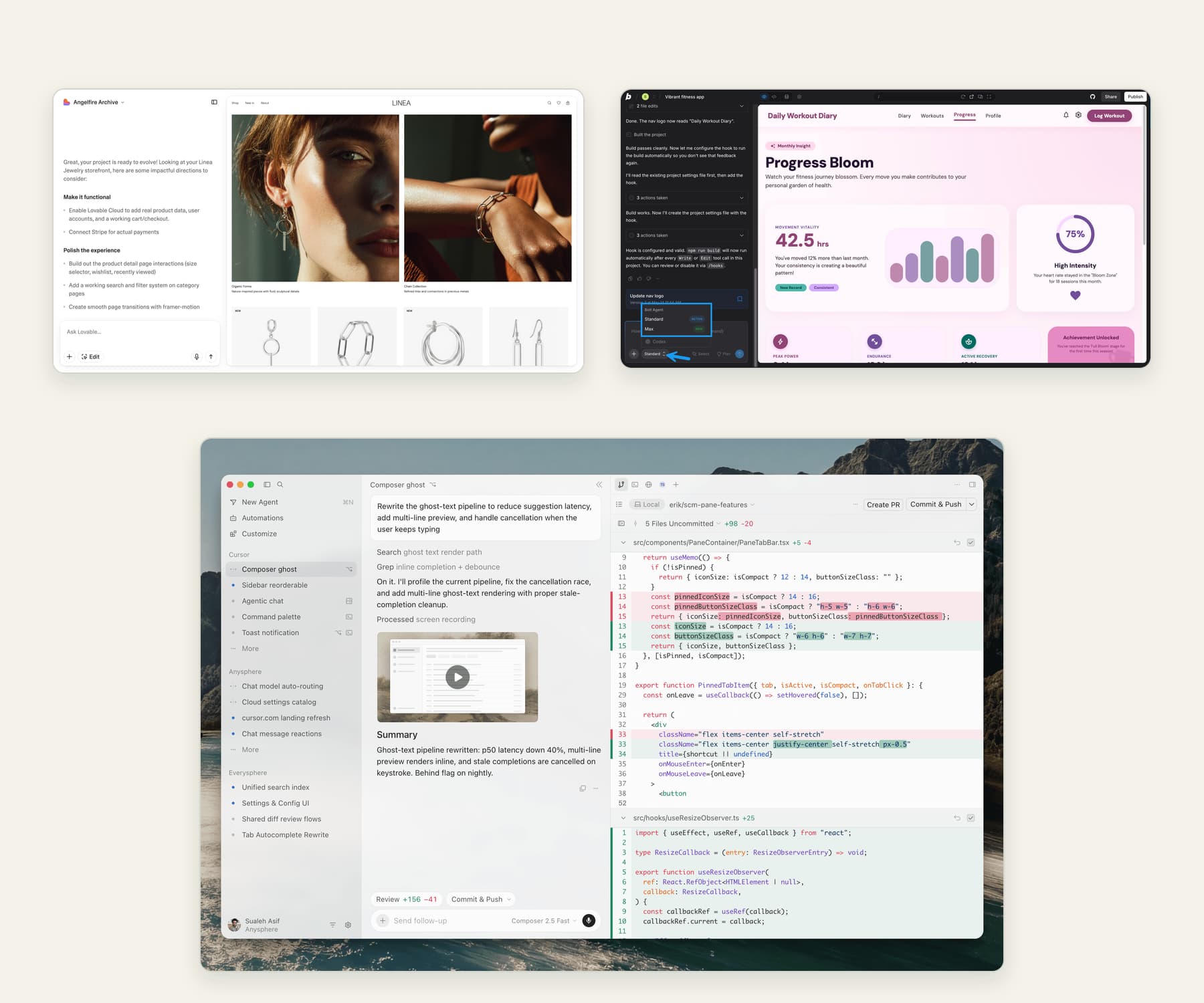
Building a prototype with Cursor, Lovable, Bolt or Copilot can get an idea moving quickly. If bugs, costs or maintenance are now holding you back, we assess the code, fix the priority issues and establish a foundation your team can operate, keeping what already delivers value.
Assess · Stabilize · Support
AI assisted development, also known as vibe coding, makes it easier to test ideas. As the project grows, changes may break other workflows, costs become hard to track, access rules remain unclear or the code becomes difficult to maintain.
AI Code Rescue helps you understand that starting point. We review the application and, where present, its AI layer: instructions, agents, data and providers. That evidence guides what to repair, isolate or rebuild in stages.
We weigh each module’s risk and value, along with the effort to maintain or rebuild it. Our recommendation follows the actual condition of the project.
If users or demos rely on the prototype, we agree which errors, access issues and deployment problems need attention first.
We deliver a risk inventory, system map and prioritized list of improvements so you can decide where to invest next.
We define deliverables, acceptance criteria and responsibilities. We document what has been resolved and what needs a later phase.
We work with code from internal teams, founders and other agencies. Where documentation is missing, we include or quote the analysis needed to get started.
The assessment establishes what your project needs. Stabilization and improvements are quoted based on the findings and agreed priorities.
We gather business context, symptoms, affected users and the state of the code. We establish whether it is a demo, an internal pilot or an application already in use.
We review architecture, dependencies, authentication, secrets and environments. Where models are integrated, we assess instructions, agents, document retrieval, logs and cost limits.
We present findings, risks and alternatives with estimated effort: fixes, module isolation, refactoring or rebuilding part of the system.
We address the agreed priority issues: outages, data loss, permissions, exposed credentials, failed deployments or uncontrolled API usage.
We reorganize the areas with the highest risk or value: modules, configuration, error handling and model instructions. We add tests for the critical workflows within scope.
Where relevant, we centralize keys and configure timeouts, retries, logs and usage limits. We separate providers from the application to make future changes easier where compatible.
We prepare an operations guide, a system map and steps for deployment and rollback. We document precautions and outstanding work for your team or Deskrive Care.
If rebuilding the core makes sense, we identify which workflows, interfaces and instructions can be retained and define the scope for an MVP or new modules.
From the current state of the code to a technical decision and a plan with clear priorities.
Symptoms, users, urgency and technical access through agreed channels.
Review of code, security, operations and the AI layer where applicable.
Options, deliverables, priorities and boundaries for the work ahead.
Critical fixes and a foundation that can be deployed and operated within the agreed scope.
Refactoring, AI controls and tests in the areas covered by the plan.
Documentation, owners and outstanding work for a next phase, Care, MVP or Integration.
The assessment may also recommend rebuilding part of the product. We explain why and agree on that scope before developing it.
Every starting point is different. The goal is to regain control of the code and its operation.
For: teams preparing to present their prototype or open it to users.
May include: initial assessment, critical fixes, a stable environment and usage limits until the next phase.
For: operations, support or finance teams relying on an application built with AI.
May include: stabilization, permissions, backup review, deployment and operational documentation.
For: chats or agents with growing consumption and limited visibility.
May include: usage limits, consumption logs, response caching where appropriate, and a review of instructions and loops.
For: projects with keys in the code, unclear permissions or sensitive data in logs.
May include: exposure assessment, credential rotation and authentication and permission improvements within scope.
For: teams that lost the prototype’s author or need to share maintenance responsibilities.
May include: a system map, operations guide, refactoring of critical modules and handover to the team.
For: projects whose assessment recommends a new technical foundation.
May include: recovery of useful workflows, interfaces and instructions, plus scope definition for a clean MVP.
These scenarios illustrate possible coverage. Deliverables and limits are agreed after the assessment.
We agree on indicators to verify progress and make remaining risks visible. Depending on the project, these may include:
Access to code, environments and credentials is coordinated during kickoff through agreed channels. Do not send passwords or API keys in the form.
What product you have and whether you have its code or repository.
What is failing or concerns you: bugs, security, costs or maintenance.
Whether there are real users, an internal pilot or just a demo.
The technologies or tools used, if you know them.
The next phase depends on the assessment. Complementary services are scoped and quoted separately.
If rebuilding the core makes sense, we define a first version with a product scope and a new technical foundation.
Explore serviceWhen the stable application needs to connect AI capabilities with a CRM, eCommerce platform, ERP or other systems.
Explore serviceOngoing support after the rescue: monitoring, fixes and improvements with agreed coverage and service hours.
Explore serviceTo develop and evolve the digital product beyond the stabilization phase.
Explore serviceIf the next stage requires new features, modules or a broader web platform.
Explore serviceWhen the product needs a mobile application or an experience on additional devices.
Explore serviceIf there is no system map, we define the work needed to understand and document it as part of the assessment.
Let’s talk about your prototype
Describe the product, what is failing and whether it already has users. We will propose an assessment and a stabilization plan.
A tailored quote after assessment, with agreed scope and priorities.
We prepare an assessment with a defined scope. We then quote stabilization and improvements based on findings, project size and agreed priorities. We do not publish fixed prices.
Code Rescue starts with existing code that needs assessment or stabilization. An accelerated MVP builds a new minimum product. The assessment may recommend continuing part of the rescue as an MVP.
Integration connects AI capabilities to systems already in operation. If the technical foundation has stability or maintenance issues, we assess and address those first.
We only recommend it when the assessment supports that decision. We aim to retain what delivers value and focus work on the areas with the greatest risk or impact.
It depends on the state of the code, available access and scope. We agree on the assessment schedule and use its findings to plan stabilization. Indicating urgency does not guarantee immediate service.
Yes. We review projects from internal teams, founders and other providers, including prototypes created with AI assisted development tools.
The focus is the application and, where present, its use of models: APIs, instructions, document retrieval and agents. Model training or tuning is assessed and quoted separately.