Understand before rewriting
The assessment uncovers business rules, dependencies and risks hidden in the code. Without that evidence, we do not propose a fixed scope per module.

Deskrive AI · Legacy modernization
Your system works, but every change costs more, few people understand it and connecting it to other tools is a challenge. We use AI agents to read and document the code, map dependencies and speed up a step-by-step migration. Our engineers review every step and stand behind the result.
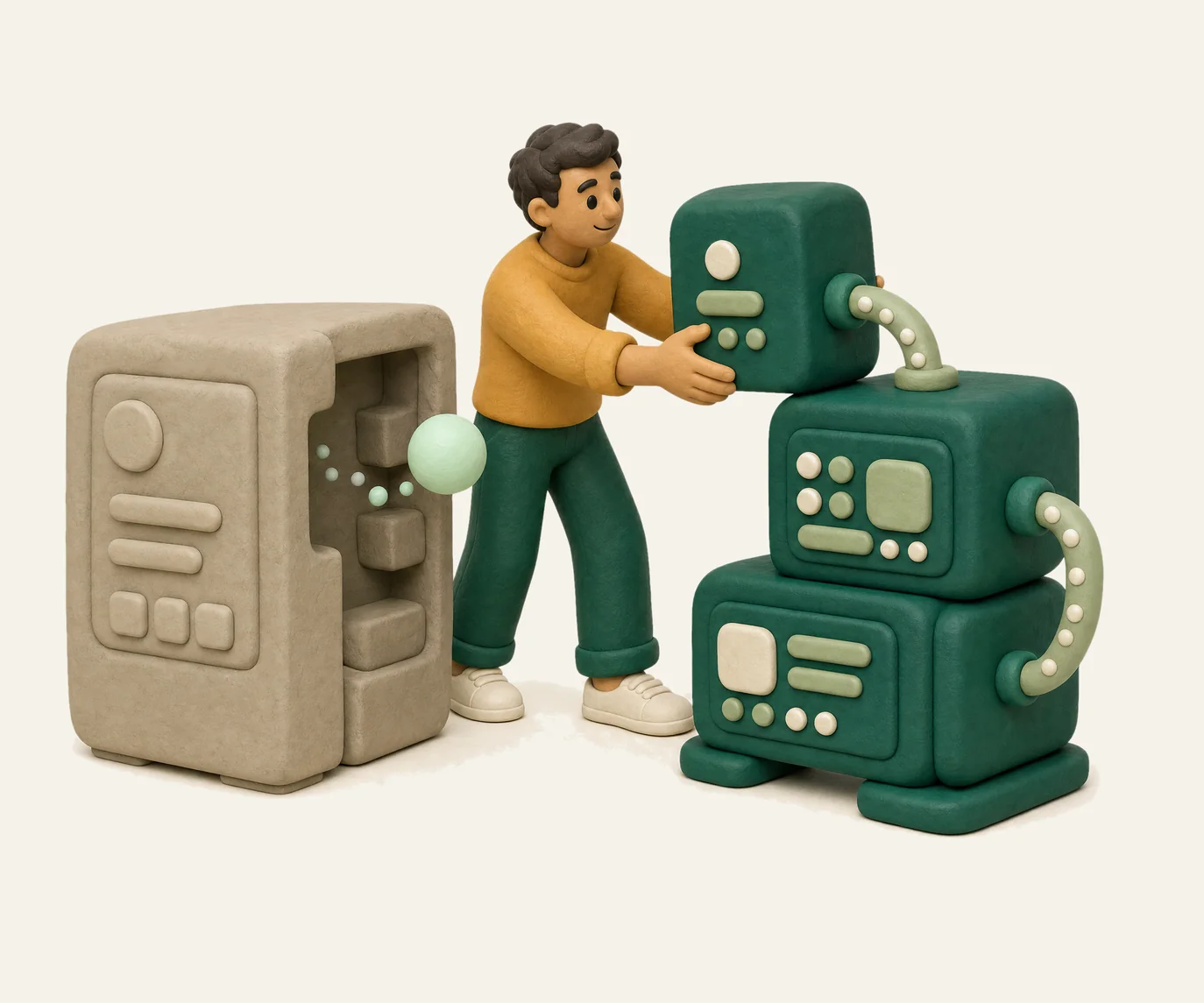
Understand · Document · Migrate step by step
Many systems that keep operations running were built years ago: a custom ERP, an internal system, a database with its own processes or a desktop application. They still work, but they accumulate undocumented code, technologies with limited support, fragile integrations and knowledge that only a few people hold.
Legacy modernization starts by understanding that system before touching it. With AI agents we read the code, document its business rules and map its dependencies. With that evidence, our engineers propose the new architecture and a module-by-module migration plan that keeps what already delivers value.
The assessment uncovers business rules, dependencies and risks hidden in the code. Without that evidence, we do not propose a fixed scope per module.
We migrate in parts and agree on how the current and new systems coexist during the transition, so your team can keep working.
AI agents speed up reading, documenting and migrating the code. An engineer reviews and approves every change before it goes live.
We deliver a system map, documented business rules and behavior tests, so the system no longer depends on a handful of people.
We work with systems built by your team, other vendors or Deskrive. If documentation or source access is missing, we account for it in the assessment.
The assessment defines what your system needs. The migration is quoted by module, based on findings and agreed priorities.
We review the code, database, infrastructure and the processes that depend on the system. We identify what to keep, what to migrate and what is better replaced.
AI agents go through the code and produce a first draft of technical and functional documentation. Our engineers review it and validate it with your team.
We map modules, databases, files, external services and integrations with other systems, so we know what each change affects.
We document the rules that live in the code and create tests that capture how it works today, to confirm the new system behaves the same where it should.
We propose the new architecture, technology and how to split the system into modules, based on your operation, your integrations and your team.
We rewrite or refactor one module at a time, each with its own scope and acceptance criteria. AI speeds up the work and an engineer reviews every change.
We plan data migration, validations and coexistence with the current system. We reconnect your integrations with ERP, CRM, payments or other systems.
We deliver documentation, access and an operations guide. Your team can run the new system or continue with Deskrive Care for maintenance and evolution.
From the system that works today to a foundation that can evolve, one module at a time.
Goals, processes that depend on the system, risks and technical access through agreed channels.
AI-assisted reading, dependency map, business rules found and risks in the current system.
Target architecture, migration order, deliverables and acceptance criteria for each module.
A priority module migrated in a test environment, to validate the approach with your team before continuing.
Modules, data and integrations migrated in parts, with behavior tests and an engineer's review.
Release with your authorization, documentation, orderly retirement of the old parts and handover to Deskrive Care if you wish.
The assessment may also recommend keeping parts of the current system or replacing them with an existing tool. We explain why and agree on the scope before building it.
Every system has its own history; the goal is for it to evolve at the pace of the business again.
For: companies whose system works, but every change breaks something else.
May include: assessment, behavior tests on critical flows, documentation and a module-by-module migration plan.
For: teams that depend on whoever built the system or have lost that person.
May include: AI-assisted code reading, documented business rules, a system map and an operations guide.
For: systems built on languages, frameworks or servers with limited support or hard to update.
May include: risk assessment, target architecture and a step-by-step migration to a current technology.
For: operations that need to connect the system with CRM, eCommerce, payments or AI.
May include: an integration map, a connection layer or API and modernization of the modules that block it.
For: teams that need access from different locations, devices or for more users.
May include: a new web application built by module, data migration and coexistence with the current system during the transition.
For: companies opening branches, channels or markets and hitting the limits of their current system.
May include: capacity assessment, modular architecture and an evolution plan agreed by priority.
These scenarios illustrate possible coverage. Deliverables and limits are agreed after the assessment.
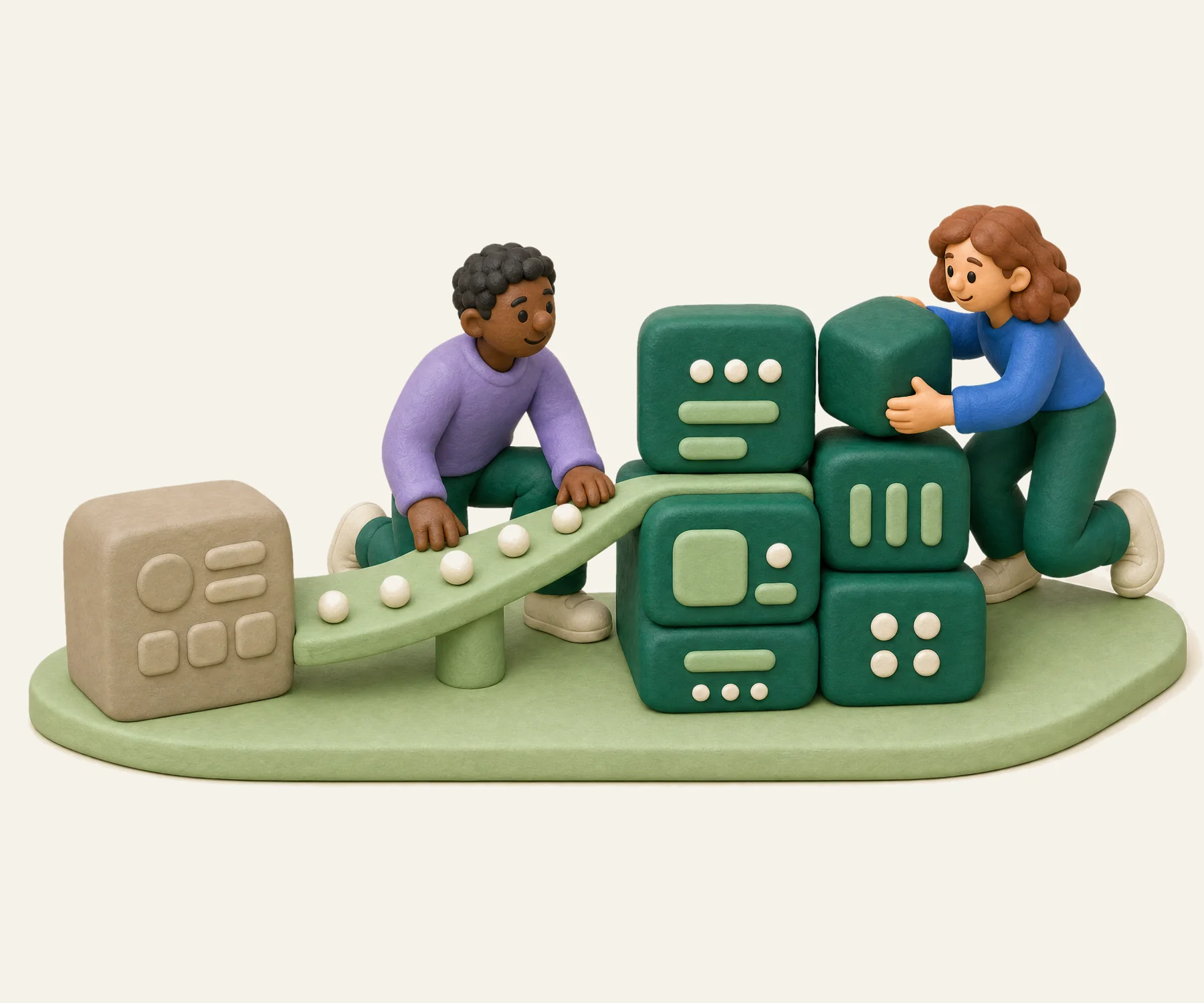
We agree on indicators to verify progress and make outstanding risks visible. Depending on the project, they may include:
Access to code, databases and servers is coordinated during kickoff through agreed channels. Do not send passwords or sensitive data in the form.
What system you have, which processes depend on it and who uses it.
Whether you have the source code and access to the database.
What concerns you: maintenance, integrations, technology support or growth.
The technologies it uses, if you know them, and any existing documentation.
Let’s talk about your system
Describe the system, which processes depend on it and what is holding you back. We will propose an assessment and a module-by-module modernization plan.
A tailored quote after assessment, with scope by module and agreed priorities.
The next phase depends on the assessment. Complementary services are defined and quoted separately.
Continuity after the migration: monitoring, fixes and evolution of the new system with agreed coverage and support hours.
Explore serviceWhen the modernized system is ready to connect assistants, agents or automations with your data and processes.
Explore serviceIf you need to validate a new AI capability before adding it to the modernized system, we build a first version with a focused scope.
Explore serviceIf what is holding you back is a recent prototype built with AI or vibe coding, rather than a legacy system.
Explore serviceWhen the modernization needs to connect the system with SAP and its processes.
Explore serviceIf, beyond migrating, the next stage requires new features, modules or a broader web platform.
Explore serviceWhen the modernized system needs a mobile app for your team or your customers.
Explore serviceWe start with an assessment with a defined scope. Based on its findings, we quote the migration by module, depending on the size of the system, its integrations and agreed priorities. We do not publish fixed prices.
Rescue starts from a recent prototype, built with AI or vibe coding, that is not working well. Modernization transforms a system that has been running for years and works, but now holds your company back: old code, little documentation or difficult integrations.
That is not the goal. We migrate by module and agree on how the current and new systems coexist during the transition. If a step requires a change window, we plan it with you.
Only when the assessment justifies it. It is often better to keep parts, refactor them or wrap them behind an API. We focus the work where the risk or the value for your operation is highest.
It depends on the size of the system, its integrations, the documentation available and the scope. We agree on the assessment schedule and, based on its findings, the module plan.
No change goes live without an engineer's review. The code is yours under your contract, and we do not use your company's sensitive data with AI tools without your agreement. We work with minimum access and separate environments.
Yes. We work with systems built by internal teams, other vendors or Deskrive. If there is no documentation or part of the code is missing, we account for it in the assessment.